How to Build AI Marketing Workflows That Actually Scale
By Ari Ber · September 21, 2026
Category: ai-transformed-workflows

AI marketing workflows fail not because the tools are weak, but because the process around them is still manual - here's how to fix the design.
Key takeaways
The problem AI tools are fast, but the manual handoffs around them keep content teams slow.
Core insight Scalable AI workflows are built around process design, not just which tools you buy.
Practical outcome Audit one article's path from idea to live URL and you'll find your first bottleneck to fix.
Most content teams have AI writing tools. Most content teams are still slow. The gap between those two facts is where your publishing capacity is leaking.
AI marketing workflows aren't about which tool you're running. They're about whether your process is designed to let AI do what it does well - or whether you're forcing it to adapt to a manual workflow that was already broken before you added it.
The Problem: Manual Handoffs Kill Momentum
Here's a pattern that shows up constantly. A team wants to publish three articles per week. In practice, they average two. The gap isn't writer capacity or AI output quality. It's the path a piece of content takes between "idea" and "live."
A content plan gets created in a planning doc. Someone shares it in Slack. The AI tool gets opened in a separate tab. A draft comes back. The editor reads it, decides the tone is off, and rewrites three paragraphs by hand. The draft goes to a Google Doc for review. Two approvers leave comments on different versions. Someone consolidates the feedback into a new doc. The writer (or the editor, or whoever's free) makes the changes. It goes back for sign-off. Then it gets formatted and uploaded to the CMS.
Count the tool switches in that sequence. Count the email threads and Slack pings required to move it forward. Count the times a human had to stop what they were doing to route something or reconcile versions.
The AI draft required a manual rewrite not because the AI is bad at writing - it's because the brief it received was generic, disconnected from the brand's past articles, and didn't include the source material the editor would have used anyway. The fact-checking happened manually not because the facts were hard to verify - it's because no one set up a workflow where the sources traveled with the content plan.
The core contradiction here: teams have AI tools that can draft at scale, but their workflows force them to slow down to human speed anyway. The AI is fast. The handoffs are slow. And the handoffs win.
Why Slow Workflows Cost More Than You Think
This is worth treating as a math problem rather than a frustration.
Three numbers matter: time-to-publish, cost per article, and consistency. Most teams track none of them with any precision. They know roughly how many articles they publish per month. They rarely know how many days elapse between a content plan and a live URL, how many salary hours each article actually consumed, or whether articles produced in week one look and sound the same as articles produced in week eight.
If your team publishes 50 articles per quarter and your workflow is designed well enough to publish 150, you're not behind on tools. You're behind on process. A competitor who publishes three times as much content can test more angles, capture more search intent variations, and respond to trend shifts before you've finished your editorial calendar for the month.
That compounding effect is the real cost. Slower teams don't just publish less. They learn less, they iterate less, and they fall further behind on what works. Understanding which content ROI metrics actually matter is often what separates teams that course-correct quickly from those that keep optimizing the wrong things.
The constraint isn't AI capability. Teams have the tools. What they lack is workflow design - a deliberate structure that determines which work the AI does, which work a human does, and how those two things connect without a dozen manual steps in between.
How Smart Teams Are Responding
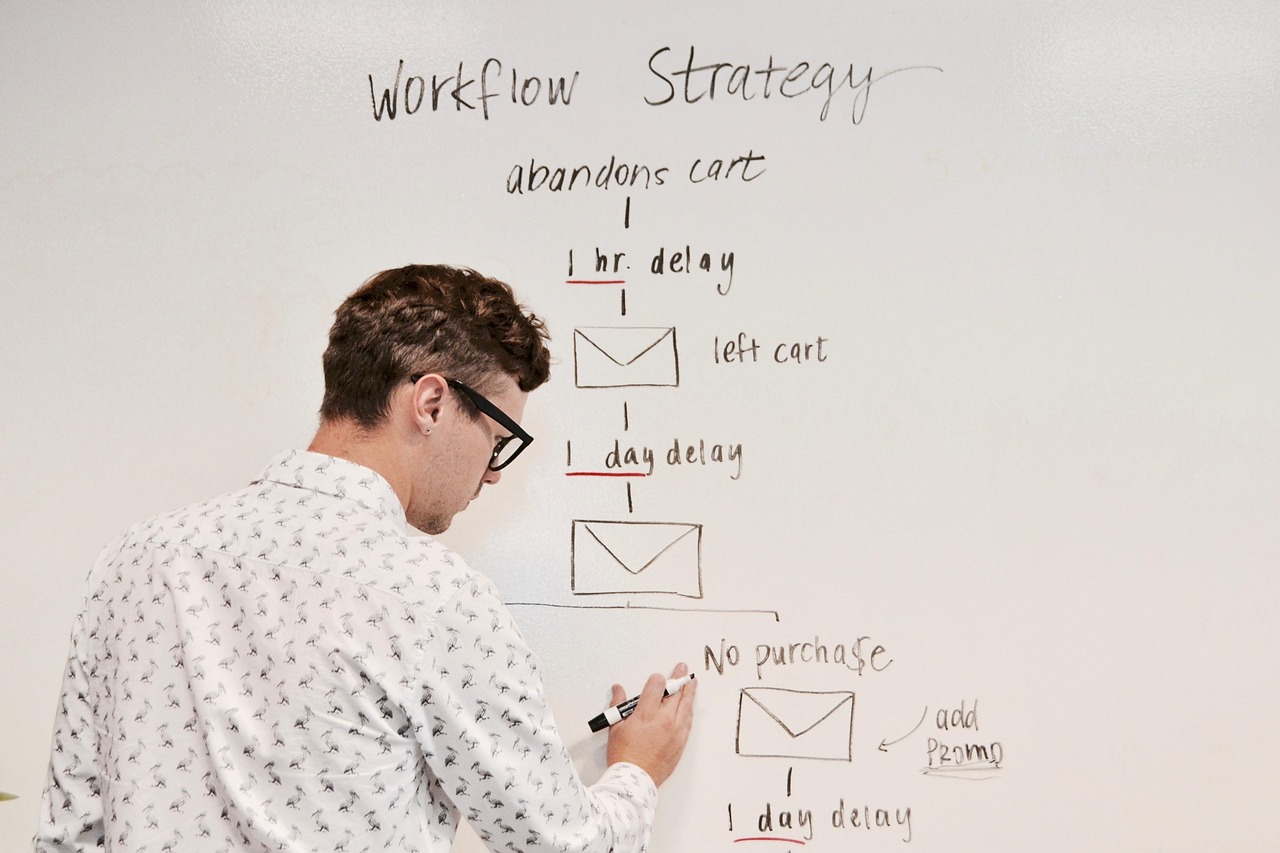
The teams that have actually solved this didn't buy more tools. They redesigned the sequence.
A few workflow patterns that show up in teams publishing consistently at scale:
Pattern one: the brief travels with the draft. Trigger: a content plan is created in the workspace. The Editor-in-Chief assistant pulls the brand guidelines, the relevant source material, and the structural template automatically. The first draft comes back already formatted, already on-brand, already sourced from the right inputs. The editor's job shifts from rewriting to reviewing. That's not a small change - it's the difference between 90 minutes of editing and 20.
Pattern two: approval happens in the same place as the draft. Trigger: a draft is ready for review. Instead of moving it to Google Docs and tagging people in comments, the approval workflow lives inside the platform. The Editor-in-Chief and the brand lead see the same version, in the same place, at the same time. Comments are resolved in one thread. There's no version consolidation step because there's only ever one version. Time-to-approval drops from days to hours.
Pattern three: iteration is a prompt, not a rewrite. Trigger: the first draft gets feedback. Instead of a writer making manual edits across a long document, the Editor-in-Chief regenerates the relevant sections based on the feedback - adjust the tone, tighten the structure, expand the third section. The human's job is to direct, not to execute. That feedback loop closes in minutes rather than days.
What these teams share isn't a specific tool. It's the same underlying principle: AI handles drafting, formatting, and consistency; humans handle strategy, judgment, and sign-off. The workflow is designed around that division of labor, not bolted onto a manual process that predates it.
What This Means for Your Stack

The most common mistake is buying an AI writing tool and dropping it into an existing workflow. Slack ping to open the tool, paste in the brief, copy the draft to Google Docs, share the link in email, receive feedback in comments, paste edits back into the tool. That's not an AI-native workflow. That's a manual workflow with an AI step inside it.
A workflow that actually scales has a few specific properties. The AI can see your brand guidelines, your past articles, and your source material before it writes a word - not because you pasted them in, but because they live in the same place. You build the workflow once and run it the same way every time. Approval and feedback happen inside the platform, not in a parallel communication thread.
On tool selection: the question to ask isn't "does this AI write good drafts?" Every serious AI writing platform does. The question is whether the platform is designed around a workflow or around a single output step. A platform that handles brief, draft, feedback, and approval in one place is structurally different from a tool that hands you a draft and leaves the rest to you. If you're evaluating where your current stack is creating drag, a fragmented content operations stack costs more than most teams realize - often in deals, not just hours.
On team structure: with AI handling the drafting and formatting work, the role that matters most isn't the writer. It's whoever designs and maintains the workflow - the person who sets up the templates, tunes the brand guidelines, monitors consistency, and decides when the process needs adjusting. Some teams will need fewer writers. Most will need someone who thinks about workflow design as a core responsibility, not a side task.
Some teams will resist this framing because it feels like admitting the current process is broken. It probably is. That's not a failure - it's just an accurate diagnosis. The teams that move fastest are the ones that audit their workflows honestly and redesign around what AI is actually good at, rather than defending the process they already have.
The Opportunity Ahead
A team publishing three articles per week with a well-designed AI workflow could reasonably publish ten - same headcount, same budget, different process. That's not a theoretical number. It reflects what happens when you remove the manual handoffs, the tool switches, and the approval delays that currently absorb most of the time between idea and publish.
But the bigger shift isn't volume. It's what higher volume lets you do. Teams that publish more can test more angles, and maintaining brand voice at that scale becomes the real differentiator - the thing that separates teams producing more content from teams producing better content.
Frequently Asked Questions
Isn't AI workflow design just another marketing trend?
The trend is AI writing tools. The shift is workflow design - and those are different things. Tools come and go; the teams that built better processes in 2020 are still outperforming teams that didn't. A well-designed workflow compounds over time regardless of which specific tools are inside it.
How do I know if my team's workflow actually needs fixing?
A quick diagnostic: if you want to publish more content but your pace hasn't changed despite adding AI tools, the workflow is the problem. A second signal - if your drafts live in Google Docs, approvals happen in email comments, and your content plan exists in a separate spreadsheet, you're doing manual coordination work that a designed workflow would eliminate.
What's the first concrete step to build a better AI marketing workflow?
Map your current process on a whiteboard - every handoff, every tool switch, every approval gate. You'll see the bottlenecks within about 20 minutes. Then pick one workflow, like moving from content plan to first draft, and redesign it to cut one tool switch or one approval delay. Run it for five articles and measure the time difference before changing anything else.
What types of teams are doing this well?
SaaS companies publishing 50 or more articles per month, in-house agencies managing multiple brands simultaneously, and small marketing teams with no budget to add headcount. What they share is treating workflow design as a core competency - not something that gets figured out ad hoc. They invest in platform features that handle the routine steps and keep humans focused on strategy and judgment.
What's the actual risk of leaving the workflow as-is?
The risk isn't immediate - you won't lose customers next quarter from a slow publishing process. But over 12 to 18 months, competitors who publish three times as much content will test more angles, own more search real estate, and learn faster than you do. There's also a quieter cost: teams with AI tools but slow workflows stay frustrated. They feel like they should be moving faster and can't explain why they're not.